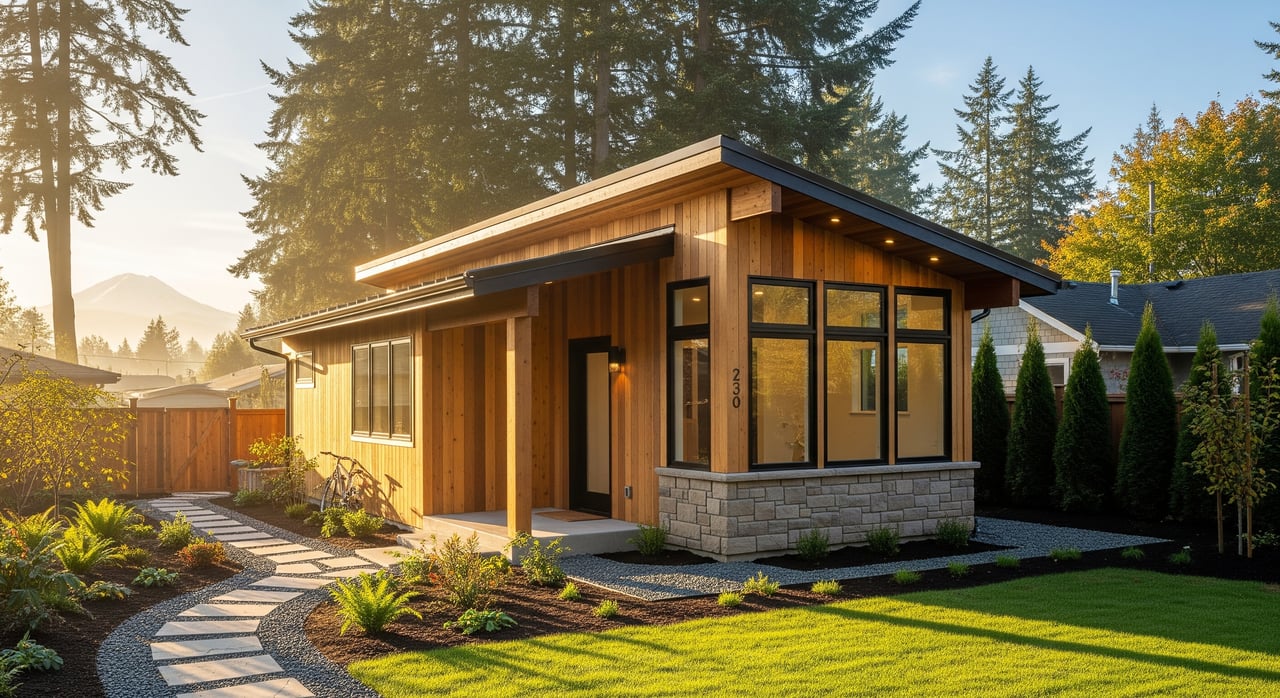
Thinking about adding an accessory dwelling unit to your Snoqualmie property, but not sure how to keep it code compliant? You are not alone. An ADU can add flexibility, rental potential, and long-term value, but the rules matter. In this guide, you will learn the key design and permitting steps that help your ADU sail through review the first time. Let’s dive in.
Snoqualmie ADU rules at a glance
You can build attached, detached, or internal ADUs in Snoqualmie, and up to two ADUs on a single-family lot if you meet zoning standards. The city caps ADU size at 1,000 square feet of gross floor area. State law supports this framework and sets limits on what local governments can require. Review Washington’s state ADU guidance for the big picture and confirm local details in Snoqualmie’s ADU chapter.
- Read state ADU guidance from Commerce: Washington ADU policy overview
- Check local rules: Snoqualmie SMC 17.55 ADUs
Design for zoning and site
Lot and configuration
Confirm your parcel is in a single-family zone where ADUs are allowed and whether your idea is attached, detached, or a conversion. The code allows up to two ADUs per eligible lot. If you plan both an attached and a detached unit, verify any zone-specific standards early. Start by reviewing the city’s ADU chapter and your property’s zoning map.
Size and setbacks
Your design must fit standard residential setbacks, height, and lot coverage that also apply to the main house. The ADU’s maximum gross floor area is 1,000 square feet. The city cannot impose extra aesthetic or entry-location rules that go beyond what applies to the principal dwelling. Keep your plans consistent with the main home’s design standards to speed review.
Parking and access
Snoqualmie does not require off-street parking for an ADU if your lot is within one-half mile of a major transit stop or your lot is 6,000 square feet or smaller. If your property does not meet those criteria, plan for parking that fits standard residential rules. Confirm driveway limits and any access easements before finalizing your site plan. See SMC 17.55 for details.
Floodplain and critical areas
Homes near the Snoqualmie River or mapped critical areas face extra steps. In flood zones, ADUs must meet elevation or floodproofing standards and new residential construction is generally not allowed in a regulatory floodway. If your site is in a mapped flood area, expect additional review and engineering. Start by checking the city’s flood hazard regulations during concept design.
Fire safety
ADUs must meet fire code requirements. Site conditions like structure size, fire flow, and access can trigger sprinkler or other protections. Coordinate early with the fire marshal if you are planning a detached unit, a unit above a garage, or a larger footprint. Regional code references are available through King County’s fire code materials, including this legislative reference.
Utilities, connections, and fees
Sewer and water
Before you pull a side-sewer permit, Snoqualmie requires a Certificate of Sewer Availability. Connection charges, general facilities charges, and side-sewer permit fees are outlined in the city’s sewer and water code. These fees depend on service needs and meter size, so decide early whether the ADU will share utilities or have separate service. Separate metering can affect cost and future options.
County capacity charge
When you add a dwelling unit, the region may assess a sewage treatment capacity charge. Cities report new units to King County for this purpose. For context on how jurisdictions handle this, review Seattle’s overview of the King County sewage treatment capacity charge. Plan this into your pro forma so there are no surprises.
Impact fees and state limits
State law sets clear limits on ADU impact fees. If impact fees apply, they cannot exceed 50 percent of what would be charged to the principal housing unit. Review the statute at RCW 36.70A.681 and confirm current local fee schedules during permit intake.
Separate meters and resale options
Washington law does not allow local bans on selling a condominium unit that was originally built as an ADU if the unit has independent utilities. If you might want that option someday, plan for separate metering and consult qualified professionals about condominium steps. See state parameters in RCW 36.70A.681.
Permitting steps that work
Start with pre-application
Use the city’s pre-application process to flag issues early. Ask about zoning confirmation, floodplain or critical areas, utility availability, driveway access, and fire access. You can find submittal forms and checklists in the city’s online forms center.
Prepare a complete submittal
Most projects need land-use confirmation, a building permit, and separate plumbing and mechanical permits. Sites in flood or other critical areas may need elevation certificates or specialized reports. Make sure your plan set covers building, energy, mechanical, plumbing, and any required floodproofing details.
Plan for review cycles
Expect at least one round of comments and revisions. Quick responses shorten timelines. If your design depends on parking exemptions, flood elevations, or separate utility service, document those clearly up front. Good coordination reduces rework and helps your ADU pass inspection smoothly.
Smart design choices for cost and speed
Convert or build new
Converting existing space, like a basement or garage, can cut costs tied to foundations, trenching, and site work. A detached ADU offers greater separation but usually adds site expenses for utilities, driveway or path, and stormwater work. Factor in possible connection charges and any county capacity charge when comparing options.
Layout within the 1,000 sq ft cap
A thoughtful floor plan makes smaller spaces live larger. Focus on open kitchen-living areas, ample natural light, and right-sized bedrooms. Keep plumbing walls stacked to reduce cost and simplify mechanical runs. Maintain design consistency with the main home to meet parity rules.
Parking and entries
If you qualify for a parking exemption, consider ways to support on-street parking and safe access. If you must supply on-site parking, place it where it meets standard residential rules. Provide a clear, well-lit entry path for the ADU and confirm address signage and emergency access early.
Simple Snoqualmie ADU checklist
- Confirm zoning and ADU eligibility for your parcel in SMC 17.55.
- Book a pre-application review and gather forms from the city’s online forms center.
- Verify sewer and water service and budget connection charges using the sewer and water code.
- Discuss fire access and potential sprinkler triggers with the fire marshal using this regional fire code reference.
- Prepare a complete, code-compliant plan set that matches main-dwelling standards.
- Confirm whether impact fees apply and note the state cap in RCW 36.70A.681.
- Submit your permits and track review comments promptly.
Building an ADU is a team effort. If you want help aligning your plan with local rules and making a smart move for your long-term goals, reach out to the Laura Papritz Team. We are happy to talk through options and connect you with local resources.
FAQs
What is the maximum ADU size in Snoqualmie?
- Snoqualmie caps ADU gross floor area at 1,000 square feet. Other site limits like setbacks or lot coverage can also affect the final footprint.
Can you build both attached and detached ADUs on one lot in Snoqualmie?
- Yes. In single-family zones, you can have up to two ADUs if you meet all other zoning and building standards.
Do you need off-street ADU parking near transit in Snoqualmie?
- Often no. If your lot is within one-half mile of a major transit stop or is 6,000 square feet or smaller, the city does not require off-street ADU parking.
Do you have to live on-site if you build an ADU in Washington?
- Generally no. State law prohibits most owner-occupancy requirements, except when an ADU or the main home is used as a short-term rental.
Can an ADU be sold separately from the main house in Washington?
- It can be possible through condominium ownership if the ADU has independent utilities and you complete required legal steps.
Are ADUs allowed in Snoqualmie floodplains?
- Yes with conditions. ADUs in mapped flood zones must meet strict elevation or floodproofing standards, and new residential construction is generally not allowed in a regulatory floodway.
Can my HOA or CC&Rs restrict ADUs in Washington?
- New communities created after July 23, 2023 cannot adopt covenants that prohibit ADUs, but older recorded CC&Rs may still apply unless amended. Always check your documents.